
Why We Stopped Eating Artificial Food Dyes (And What Happened)
In September 2021, I found myself sitting on the ground at Walt Disney World, crying right alongside my three-year-old son.
We were both completely overwhelmed. He was having a huge meltdown, I didn’t know how to help him, and neither one of us knew what to do next.
We were at The Most Magical Place on Earth, and it didn’t feel magical at all. It felt like a nightmare.

It wasn’t just one bad day at Disney World. It was one of many difficult days we’d experienced as a family, and I was desperate to figure out how to help my little boy.
At the time, I had no idea that something as seemingly insignificant as artificial food dyes might be contributing to some of the challenges we were facing.
A year and a half later, we decided to remove artificial food dyes from our family’s diet. I wasn’t expecting much. I actually did it as a last resort, and partially to be able to tell our pediatrician that I had tried everything short of prescription medication to help with these behaviors.
What happened next completely changed the way we looked at food.
Today, I’m sharing our experience with artificial food dyes and children’s behavior, what we’ve learned along the way, and how we made the switch to a dye-free lifestyle without giving up all the fun stuff kids love.
Because if you’re a parent who’s struggling with your child’s behavior, or you’re simply curious about the ingredients in your family’s food, I hope our story gives you a little encouragement and a place to start.
When Traditional Therapies Weren’t Enough
My youngest son – Rowen – was born in June 2018. He was the fastest of 4 births, out in one contraction. Walking at 10 months, the child didn’t know the meaning of chill.

By the time he was a toddler, we were struggling with some pretty significant behavioral challenges.
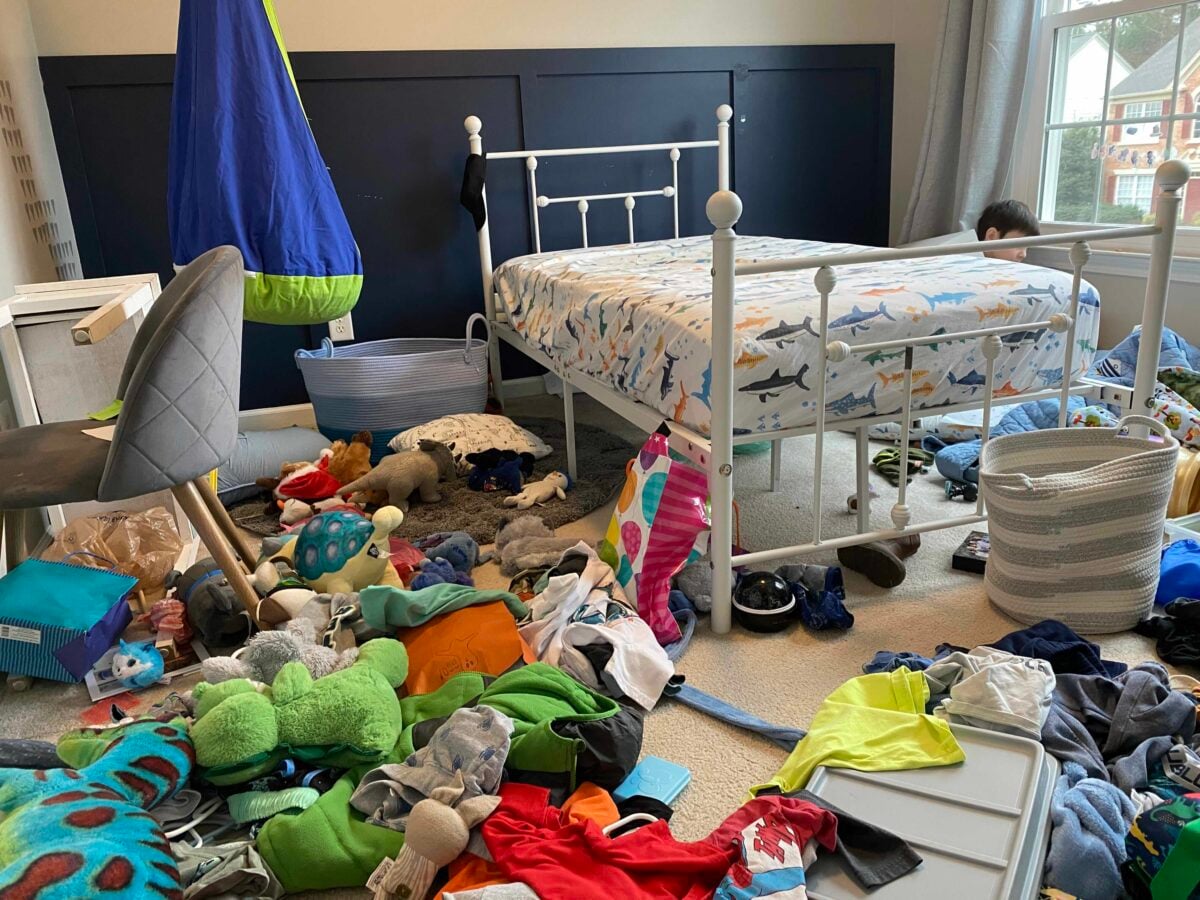
He was incredibly impulsive, often aggressive, and sometimes had complete meltdowns that we couldn’t seem to manage. He bit everyone at daycare. He broke toys and even our living room window. He headbutted me so hard once I thought he had busted my nose.
There were days when I felt like I spent every waking moment trying to prevent the next crisis.
As his mom, it was heartbreaking.
I knew Rowen wasn’t trying to make life difficult. He was incredibly sweet and loving at times. I knew he was struggling, too. But knowing that didn’t make those moments any easier for either of us.
After that particularly difficult Disney World trip in September 2021, I started looking for professional help.

He began pediatric behavioral therapy to try to manage his outbursts, and occupational therapy to address some of his sensory-seeking behaviors. We hoped that with the right tools and support, things would gradually get easier.
And while therapy helped in some ways, we were still struggling. We had to change to a new daycare because he kept climbing the playground fence. He had frequent behavior problems at both home AND school, and nothing we tried was very successful.
In June 2022, the day after his fourth birthday, he was evaluated by a psychiatrist and diagnosed with level 1 autism and ADHD.
Having those diagnoses helped us better understand some of his needs, but it didn’t make the day-to-day challenges disappear.
We continued therapies and special services, but the improvement we were seeing was limited.
By January 2023, I was exhausted. He had been going to therapy consistently and I had been reading so many books. I felt like we’d tried everything we knew to try, and I was ready to make an appointment with his doctor to discuss medication. I knew most doctors didn’t like to start medication earlier than 6 years old, but I was desperate. I needed help and so did Rowen…. but I also didn’t want to medicate him at 4.5 years old.
Let me be clear: I have absolutely nothing against medication for ADHD or other conditions when it’s appropriate. I know it can make an enormous difference for some children and families. I take medication for ADHD myself and my older children have taken it too. I just wasn’t sure it was the best choice for Rowen — although I didn’t know what the best choice was either.
I decided to explore one more option before having that conversation with his doctor.
And that’s when I decided to try changing our diet.
Why We Decided to Eliminate Artificial Food Dyes
Years ago I’d come across information suggesting that artificial food dyes might affect behavior in some children.
As I mentioned, my older children also have ADHD. They both took medication in school to help with it. At one point when they were younger, I looked into more natural options to help them with ADHD.
I had heard that food dyes could affect behavior and focus. I considered changing our diets way back then, but it just seemed too hard. Change is hard.
This time though… life didn’t feel like it could get much harder. So I looked into it again.
I’ll admit, I was skeptical.
Could something as simple as the coloring in candy, cereal, or other foods really make a noticeable difference?
I actually remember telling my husband, “Hey, we are going to try this. It probably won’t work. It’s probably a bunch of nonsense. But I have to at least say I tried.”
To my surprise, he didn’t argue. He didn’t tell me why we shouldn’t or try to convince me to not take away our familiar foods. He was on board 100%. Because he knew we needed to at least try, for Rowen’s sake.
So at the end of January 2023, we removed artificial food dyes from our family’s diet.
And that was it.
We didn’t eliminate sugar. We didn’t remove gluten or dairy. We didn’t start a completely different way of eating.
We simply stopped buying and eating foods containing synthetic food dyes.
I went through our entire pantry and refrigerator and read every ingredient label. I used up, gave away, or tossed anything that had artificial dyes.
Some items got reassigned to the top shelf of the pantry for me to eat myself. (Yes, I still ate a little candy sometimes. I’m not ashamed to admit that lol.)
At first, I didn’t notice much of a difference in the kids. There wasn’t some magical overnight transformation.
They were 4 and 6 years old. They still played and fought regularly as siblings do. Our days didn’t suddenly become peaceful, and I wasn’t convinced we’d accomplished anything.
I started wondering whether this whole experiment had been a waste of time.
Then Valentine’s Day came around.
The Valentine’s Day That Changed Everything
If you have elementary school-aged children, you already know that Valentine’s Day usually means one thing.
Candy. LOTS and lots of candy.
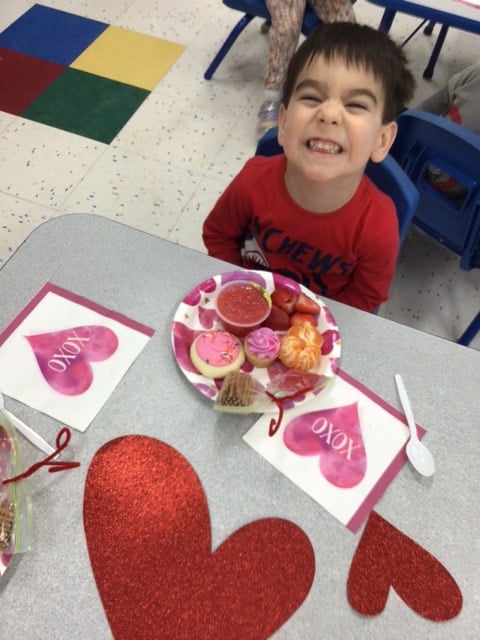
My kids came home from school with treats from their classmates, and even though we’d been avoiding artificial dyes, I decided to let them have a little.
I didn’t want them to feel like they were missing out on all the fun.
Besides, I hadn’t really noticed much improvement since we’d removed the dyes. What harm could a little Valentine’s candy do? I figured after a couple of weeks of no dye at home, this would be the experiment to see if dyes really affected them.
I wish I had known the Jekyll and Hyde situation I was creating for myself right then. Holy COW.
Both of the kids went BONKERS.
They struggled to control their impulses. They cried over everything. Couldn’t listen. Couldn’t control themselves. Their behavior was much more difficult to manage, and once again their sleep was disrupted.
And it didn’t just last for a few hours. We were dealing with the effects for days.
Suddenly, I started looking back at the weeks when we’d been avoiding artificial dyes.
Maybe there had been improvements that I hadn’t recognized because they happened gradually.
Maybe I’d been so accustomed to managing difficult behaviors that I didn’t notice when things started getting a little easier.
The reintroduction of dyes in the Valentine’s candy was the main change in our routine — and boy did it change things. That change was enough to convince me that artificial dyes were something we needed to keep paying attention to.
For our family, that was the moment we decided to take our dye-free lifestyle seriously.
And we haven’t looked back.
Can Artificial Food Dyes Affect Children’s Behavior?
Before I share more about what we’ve learned, let’s talk about the question that probably brought some of you here.
Can artificial food dyes actually affect children’s behavior?
Research suggests that certain synthetic food dyes may contribute to behavioral symptoms in some children, although not every child is affected.
Artificial food dyes are color additives used to make food and drinks look more appealing. You’ll find them in everything from brightly colored candy and sports drinks to frosting, cereals, and other packaged foods.
Some of the synthetic dyes parents commonly encounter on ingredient labels include:
- Red 40
- Yellow 5
- Yellow 6
- Blue 1
- Blue 2
- Green 3
These additives don’t make food taste better or provide nutritional benefits. Their purpose is primarily to change the appearance of a product.
In 2021, California’s Office of Environmental Health Hazard Assessment published a review of research involving synthetic food dyes and children’s behavior. The report concluded that synthetic food dyes can contribute to hyperactivity and other neurobehavioral effects in some children, and that individual sensitivity varies.
In other words, researchers haven’t established that artificial dyes cause behavioral problems in every child. But there is enough evidence to take concerns about individual sensitivity seriously.
You can read more about the research through the California OEHHA’s food dye assessment and the FDA’s information about color additives.
Are Artificial Food Dyes Linked to ADHD or Autism?
This is an important distinction, especially given our family’s experience.
Artificial food dyes have not been shown to cause autism or ADHD. And eliminating them isn’t a cure for either condition.
My son’s autism and ADHD diagnoses didn’t change because we removed artificial dyes from our diet.
What changed was our understanding of some of the things that might have been contributing to the behavioral difficulties we were experiencing.
There is research suggesting that synthetic dyes can worsen certain behavioral symptoms in some children, including some children with ADHD. But the evidence doesn’t mean that removing dyes will improve symptoms for everyone.
For our family, paying attention to ingredients became one more way we could support our children alongside the professional care and other resources available to us.
Other Ingredients We’ve Learned to Watch For
When we first started this process, artificial food dyes were our main concern. We already ate mostly whole foods, the kids loved fruit and didn’t eat tons of junk or fast food. We thought removing dyes was the solution.
But over time, we began noticing what appeared to be similar reactions after exposure to some other ingredients.
Rowen loved a particular peanut butter cereal that had no dyes listed. You know what it did have? Caramel color.
Not a numbered artificial dye. But it caused him to react the same as when he eats dyes.
That led me to start paying closer attention to preservatives, color additives, and other ingredients in the foods we were buying.
I did lots of research on ingredients that many kids have to avoid if they have reactions to artificial dyes. Some of the ingredients we’ve become particularly cautious about include:
- BHT (butylated hydroxytoluene): An antioxidant preservative used in certain foods and packaging applications.
- BHA (butylated hydroxyanisole): Another antioxidant used to help prevent fats and oils from becoming rancid.
- TBHQ (tertiary butylhydroquinone): A preservative used in some processed foods, particularly those containing fats and oils.
- Certain caramel colors: Color additives used to give products a brown appearance.
- Vanillin: An artificial form of vanilla extract used to flavor foods and drinks.
- Nitrates and Nitrites: Preservatives in processed and cured meats.
- Annatto: A natural orange-red plant extract found in cheese and butter.
- Artificial Sweeteners: Such as aspartame and sucralose.
- Artificial Flavors: No explanation needed. Honestly we avoid artificial anything.
- Petrolatum and Petroleum-Derived Ingredients: Products like Aquaphor, Vaseline, and even common lip balms.
- Fragrances/Perfumes: These are typically chemically made and can affect behavior and cause other health problems.
Many synthetic dyes and some food additives are manufactured using petroleum-derived chemical feedstocks. But that doesn’t automatically mean they have the same biological effects or that petroleum is the reason a child might react to them.
And while we’ve noticed patterns with certain ingredients in our own household, there isn’t the same level of evidence linking each of these additives to behavioral symptoms in children.
Our family’s list of ingredients to avoid has grown over time because of our experiences, not because every one of those ingredients has been proven to cause the same effects. However, many families do experience similar reactions with all the ingredients listed above — and sometimes others as well.
Why We Read Ingredient Labels So Carefully
One of the biggest changes we’ve made is simply learning to read ingredient labels.
And I mean really read them.
It’s easy to pick up something at the grocery store and assume it’s fine because it doesn’t look particularly colorful.
But artificial coloring can show up in unexpected places, and preservatives aren’t always obvious, either.
I’ve learned not to judge a food by its packaging or whether the front of the box says things like “natural” or “made with real fruit.” I turn it over and check the actual ingredients.
Jars of pickles. Salad dressing. Fruit snacks. Strawberry applesauce. Fever medicine. These may all have dye.
We also recheck products periodically because manufacturers can change ingredients and formulations.
It takes a little more effort, especially in the beginning, but it becomes second nature after a while.
It’s Not Just Food: Dyes in Everyday Products
Here’s something I never expected when we started eliminating artificial dyes.
We eventually began paying attention to ingredients in products my children weren’t even eating.
Things like face paint and play dough. Temporary tattoos. Toothpaste. Hand soap and lotion. Body wash and shampoo. Itch cream and sunscreen. Adhesive bandages.
We’ve had experiences that led us to suspect our children were also reacting after using certain products that came into contact with their skin.
Because of those experiences, we’ve chosen to avoid some products containing synthetic dyes or other ingredients we’re concerned about.
Ingredients that touch the skin aren’t absorbed into the body in the same way as ingredients that are eaten. Skin exposure depends on the substance, the product formulation, and other factors.
But.
Dyes and ingredients in products that touch the skin can absolutely be absorbed to some degree. The skin is the biggest organ we have, and there are many products (looking at you, my fabulous estradiol patch for hormone replacement therapy) that are designed to be absorbed through the skin because of how well it works.

After noticing a correlation between new products and increased behaviors, we started to also make different choices with the non-food products we use in our own home:
- Face paints
- Makeup and skincare
- Play dough
- Bath products like shampoo, bubble bath, and bath bombs
The good news is that there are alternatives.
And no, my kids don’t have to sit around playing with plain wooden blocks all day. We still have plenty of fun!
How to Start Eliminating Artificial Food Dyes From Your Family’s Diet
If you’re reading this and feeling overwhelmed by the idea of checking every ingredient in your pantry, I get it.
When you first start paying attention to food additives, it can feel like they’re hiding in everything. But you don’t have to throw out your entire pantry or spend a fortune replacing everything you own!
Here’s how I’d suggest getting started.
1. Start Reading Ingredient Labels
The simplest place to begin is with the foods your family already eats.
Take a look at the ingredient lists on your children’s favorite snacks, cereals, candies, drinks, and desserts.
Look for synthetic color additives listed by name, such as Red 40, Yellow 5, Yellow 6, or Blue 1.
You may also see the longer labeling format, such as FD&C Red No. 40. Some have “Lake” in the name too.
Don’t assume that a food contains dyes just because it’s colorful, or that it doesn’t contain them because it looks plain.
Just. Check. The. Ingredients. List.
Remember! Artificial dyes can appear in things other than food, including some medications and vitamins. If your child takes medication, ask a pharmacist or healthcare professional about the ingredients before making any changes.
2. Find Dye-Free Replacements for Foods Your Kids Already Love
This is probably my favorite part of the whole process.
When we started eliminating dyes, I didn’t want my kids to feel like they were being punished.
They were already dealing with enough challenges. I certainly didn’t want every birthday party, holiday, or trip to the grocery store to turn into another battle.
So instead of focusing on everything they couldn’t have, I started looking for alternatives.
And there are more options than you might think!
Some swaps are as simple as choosing a different brand. The Late July nacho cheese chips are soooo good, and we like them better than Doritos!
Others might mean finding something completely new that your children (and you) end up loving just as much — or more!
The goal here isn’t to make food boring or eat only dry chicken breast and broccoli. The goal is finding options that will work for your family — things you like that don’t cause constant meltdowns and emotional disasters.
3. Pay Attention to Behavior, Sleep, and Other Changes
One thing I wish I’d done differently when we first eliminated dyes is keep better track of what was happening.
I didn’t initially think removing dyes was helping. I didn’t believe it would really help.
It wasn’t until Valentine’s Day that I began looking back and wondering whether the improvements had been gradual enough that I overlooked them.
And honestly that may also be the case for you. You may not truly notice the difference until you remove dyes for a few weeks and possibly reintroduce them (you don’t HAVE to give dyes again — it’s just what inadvertently happened with our situation).
If you’re considering discussing a dietary trial with your child’s healthcare professional, keeping notes can be helpful.
You might track things like:
- What your child eats and drinks
- Sleep patterns and nighttime waking
- Impulsivity or difficulty with emotional regulation
- Meltdowns or unusually difficult days
- Changes in routine, illness, stress, or other possible factors
You don’t have to make it complicated. A notebook, calendar, or the notes app on your phone works just fine.
The important thing is recognizing that behavior can be affected by many different things. One difficult afternoon after eating a particular food doesn’t necessarily mean the food caused it. Kids are kids and lots of things cause “bad days.”
But if your kids are like mine, you will start to see the difference between “normal bad days” and “oh my gosh what did they accidentally eat” kind of behaviors. Because they are NOT the same.
And if your child has significant behavioral, developmental, or nutritional needs, work with their healthcare team when making changes to their diet.
4. Make a Plan for School, Parties, and Special Events
I’ll tell you right now, avoiding artificial food dyes at home is one thing. Avoiding them everywhere else is another story.
There are classroom birthday treats, Valentine’s candy, Halloween parties, holiday celebrations, and all those little rewards kids receive throughout the year.
And of course, nobody wants their child to feel left out. That was the whole reason I let my children eat their Valentine’s candy in the first place!
Over time, we’ve had to learn how to navigate these situations in ways that work for our family.
For parents just getting started, I’d suggest talking with your child’s teacher and making a plan for special occasions before they come up. (More about how we handle this at school below!!)
Depending on your family’s needs, that might mean sending an alternative treat, asking to see ingredient labels, or keeping a few approved options available at school.
I also recommend explaining the situation to your child in a way they can understand without making them afraid of food. The goal is to help them feel included, not singled out.
And chances are, the more you talk about it to others, the more families you will find who avoid food dyes too! We’ve had teachers, class parents, sports team parents, and neighbors who all avoid dyes. And we’ve met many other parents who don’t avoid dyes but are interested in learning (and helping accommodate our kiddos at birthday parties and team events)!
5. Give Yourself Some Grace
Changing the way your family eats is a process.
You’re going to find ingredients you overlooked. You might accidentally purchase something you meant to avoid. Someone may offer your child a treat without realizing you’re avoiding certain additives.
And that’s okay.
I’ve learned a lot since January 2023, and there are still things I probably don’t know. We’ve made many mistakes along the way and we still keep learning.
You don’t have to become an expert on food additives overnight. That’s impossible. Don’t set yourself up for failure or you’ll be discouraged immediately.
Start with the changes you can manage, find foods your family enjoys, and build from there. Know better, do better!
Our Favorite Dye-Free Food Swaps and Treats
One thing I’ve discovered through all of this is that having dietary restrictions doesn’t mean you have to give up the foods you love.
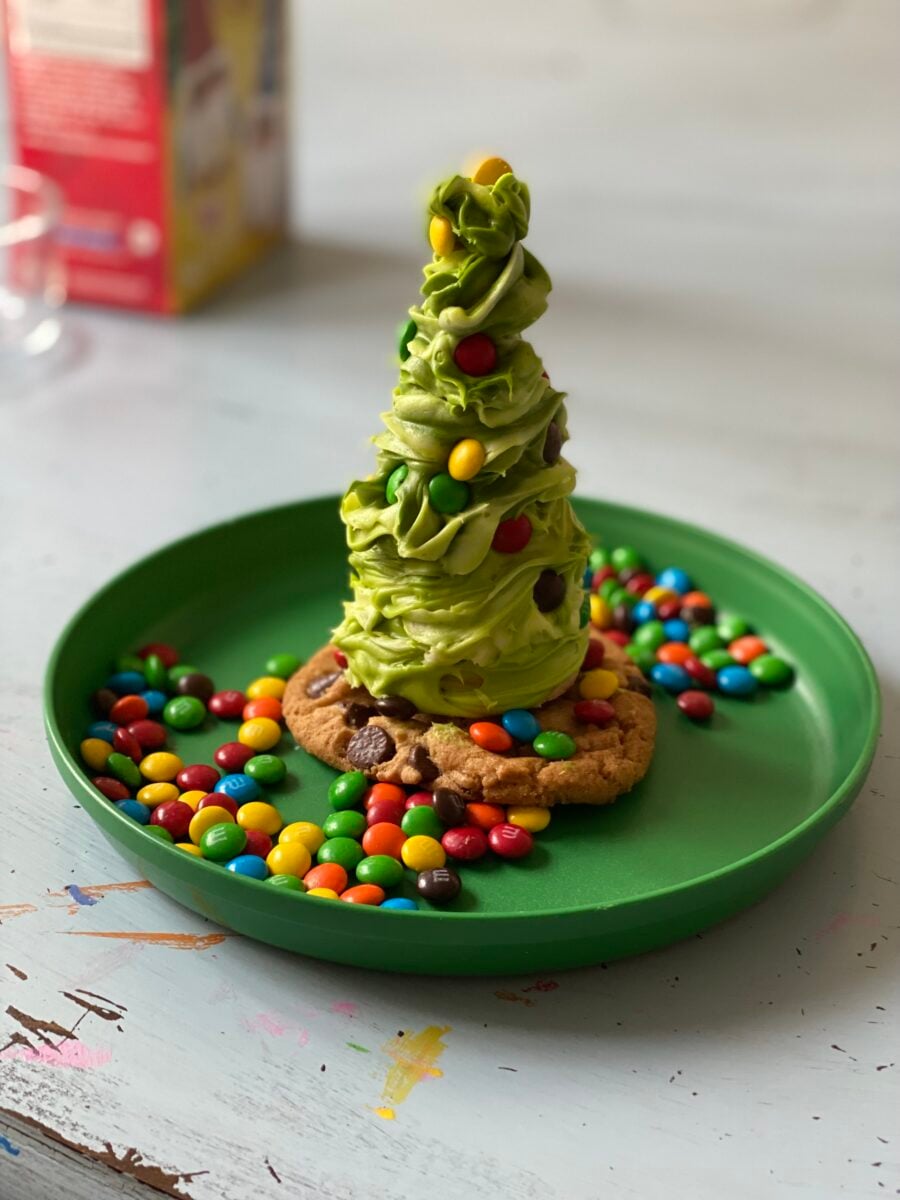
In fact, it’s encouraged me to become a much better baker!
We do most of our cooking at home now (ok, my husband handles dinner lol), and I’ve gotten pretty good at making some of the special treats my children might otherwise miss out on.
Birthday cakes and cupcakes? I make them.
Those cream cheese stuffed bagel bites from Dunkin? So easy to make.
Doughnuts? I make those, too. And they are gooooood.
I genuinely love finding new recipes and figuring out how to make things our whole family can eat!
I feel like I have to warn you though… once you get used to homemade foods — especially baked goods — you’re spoiled for life!! Eating at restaurants or eating store-bought foods just don’t hit the same anymore.
Dye-Free Candy and Sweet Treats
Finding alternatives to traditional candy was one of the ways we could help keep holidays and celebrations fun for the kids. Some that we love:
- Yum Earth candies
- Hi-Chews
- Unreal candies
I always recommend checking the current ingredient label, even on products you’ve purchased before.
Recipes change, and what’s suitable for one family’s dietary needs may not work for another.
Dye-Free Birthday Cakes and Frosting
I love making birthday cakes for my kids.
There’s something especially satisfying about creating a cake that looks and tastes delicious without using the artificial dyes we’ve chosen to avoid.
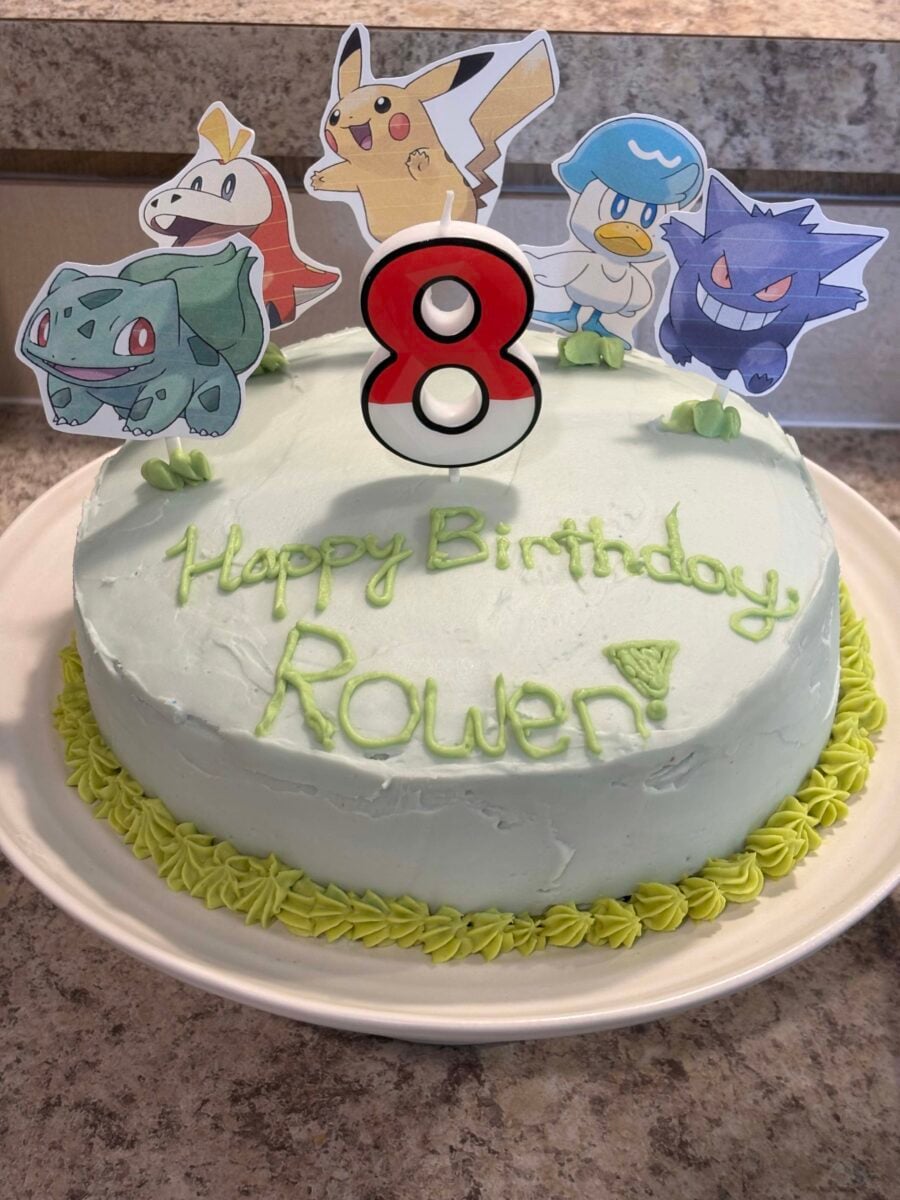
And believe me, a dye-free birthday cake doesn’t have to look boring!
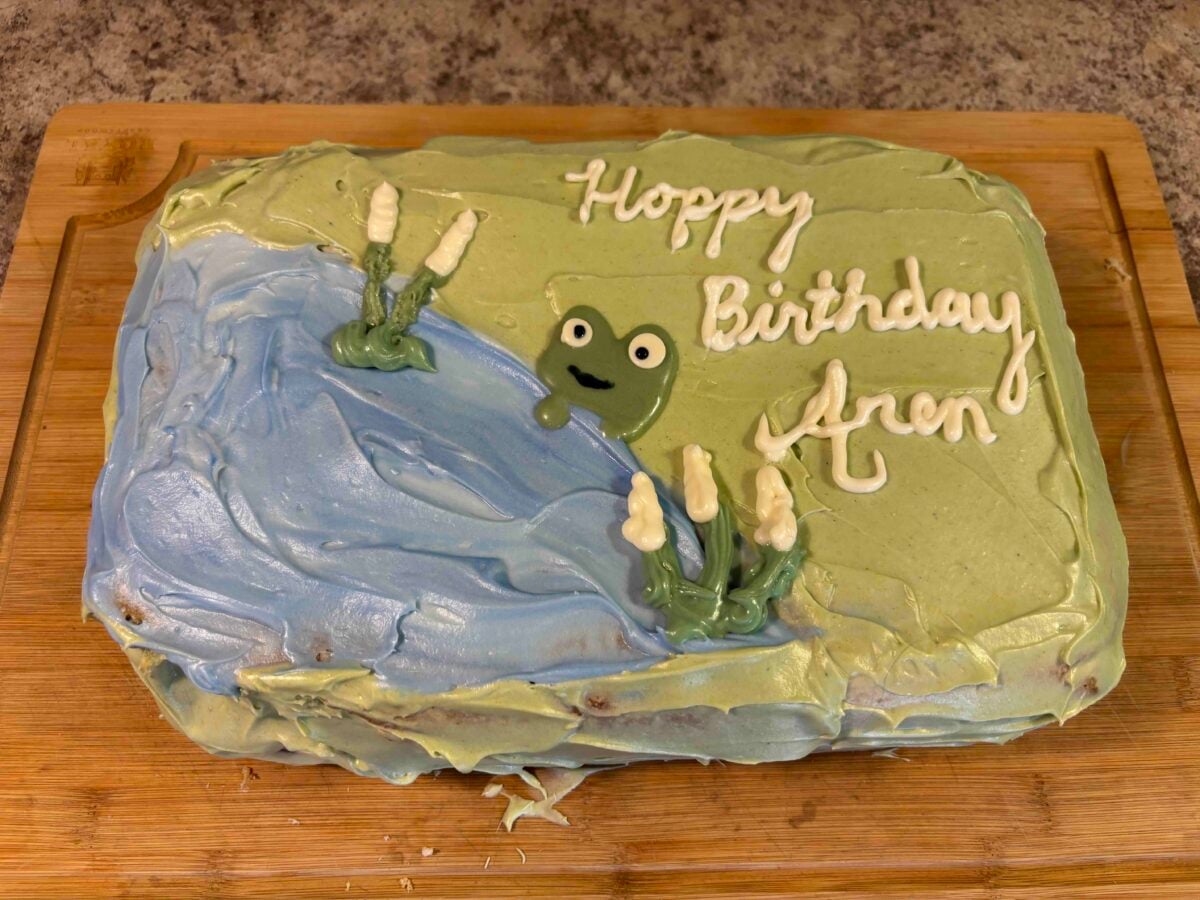
I’m not saying I’ll be a future contestant on “Is It Cake?” and my creations aren’t winning any awards… but so far my kids haven’t complained about the designs!
You might be surprised how much fun you can have experimenting with different colors, frostings, and decorations.
Dye-Free Snacks and Other Family Favorites
Not everything has to be homemade, of course. With our busy lifestyle, we always try to keep some grab-and-go snacks on hand. There are lots of options that are safe for my kids that they like to eat!
- Skinny pop
- Veggie straws
- Pirates Booty
- Pretzels
- Clif Kids bars
- Fage and Noosa yogurt
- Nature’s Bakery fig bars
- Chomps meat sticks
- Cheerios and Kix cereals
Instead of thinking about the old foods we can’t buy, we’ve tried lots of new things and found what we enjoy.
How We Handle Food Dyes at School
As both a mom and a former teacher, I think this part deserves its own conversation.
Teachers have a lot on their plates. They’re managing classrooms, meeting academic goals, supporting students with different needs, and trying to make school a fun place for children.
Food often becomes part of that process.
Candy might be used as a reward. Cupcakes appear for birthdays. Students bring in treats for holidays. There are PTA events throughout the year that involve food and treats too.
And most of the time, everyone involved has the best intentions. But not every child can eat the same foods.
Some children have allergies, some have medical dietary restrictions, and some families choose to avoid certain ingredients because of sensitivities or other concerns.
My kids’ teachers know they have reactions to food dyes (the school nurse actually has a form on file signed by our pediatrician that says so — similar to an allergy alert, but no history of anaphylaxis). I send in dye-free candies or treats at the beginning of the school year for my kids to eat when other students bring in cupcakes or birthday treats.
We are required to only send store-bought treats for class birthday celebrations, so I buy plain white or chocolate cupcakes to send for the class to enjoy when it’s my kid’s birthday. But I like to bake our own cupcakes at home and this year I sent a pretty homemade cupcake for my daughter to eat. That made it extra special for her and she didn’t feel “different” at all!
When we have holiday parties or other events where parents can send in food donations, I try to sign up to donate foods that I know may be an issue for my kids. For example, I chose to donate sprinkles and maraschino cherries for a class ice cream party. I just bought the dye-free ones so my kiddo and I didn’t have to worry!
If donating enough for the class isn’t an option, or if other parents sign up for certain things, I just make sure to send in a safe option so my kids can still participate.
The key is communicating with the teachers so they know what to expect!
A Note for Teachers: Food Rewards Aren’t Always Harmless
If you’re a teacher reading this, I want you to know that I’m not suggesting you should have to police every ingredient that comes into your classroom.
I was a teacher. I know that’s not realistic.
But I do think it’s worth considering how frequently food is used as a reward or celebration.
For children with dietary restrictions, even a small piece of candy can create a difficult situation.
Sometimes the child misses out on the treat. Sometimes a parent has to navigate the consequences of an unexpected exposure. And sometimes the teacher doesn’t even realize there’s a concern.
That’s why communication matters.
Simple nonfood rewards and inclusive classroom celebrations can make a real difference for families navigating food restrictions.
And parents, if your child needs specific accommodations, don’t be afraid to start that conversation.
Teachers can’t help with something they don’t know about.
What Life Looks Like for Our Family Today
It’s been several years since we first decided to eliminate artificial food dyes.
What started as a last-ditch experiment and almost zero faith in its success has become part of our everyday life.

We’ve learned to read labels, find alternatives, make more food from scratch, and plan ahead for situations where we might not have control over the ingredients.
We’ve also learned that our children’s reactions and needs are individual. Aren gets super emotional and has difficulty regulating herself and following directions when she’s exposed to dyes. Rowen has a sharp increase in sensory seeking behaviors, becomes aggressive and impulsive, and cannot control his body’s movements. Both have difficulty sleeping.
Without dyes and other ingredients that trigger these behaviors, both kids are incredibly kind, thoughtful, eager to please, and they excel in both academics and sports.
For us, the biggest shift has been learning that we have more options than we initially realized.
We don’t have to choose between avoiding certain ingredients and letting our kids enjoy being kids.
We’ve simply found different ways to make it happen.
There are still birthday cakes, holidays, special treats, and plenty of fun things coming out of our kitchen.
We occasionally go out to eat and we just took a vacation to Universal Studios and Walt Disney World. Yep. Our first trip back to where it all started.
I didn’t sit on the ground and cry this time, but I did do a wholeeee lot of reflecting. And I was so thankful to have an enjoyable vacation with my family.
What I Want Other Parents to Know
Even before our recent vacation, I sometimes would think back to that day at Disney World.
Sitting on the ground with my little boy, both of us crying. Him pushing me away and both of us feeling completely helpless.
So many times I’ve wanted to go back and tell that version of myself that things would not always feel quite so overwhelming.
I felt like such a failure then. I knew something was wrong but I didn’t have the answers. I wish I could go back and tell myself it would be ok.
Removing artificial food dyes wasn’t something I expected to make a difference for our family.
But it led us to pay much closer attention to ingredients, to recognize patterns we hadn’t noticed before, and to find new ways of supporting our children.
I’m not sharing this because I believe artificial dyes are responsible for every behavioral challenge a child experiences. Kids can sometimes be rotten because… you know… they are kids. Their frontal lobes are literally not fully developed.
I’m certainly not suggesting that removing dyes is a cure for autism, ADHD, or any other developmental condition.
And I don’t want any parent to think they’re doing something wrong if a dietary change doesn’t produce the same results we’ve observed.
I’m sharing because I know what it’s like to feel exhausted, overwhelmed, and desperate to find something that helps your child.
If you’re in that place right now, I hope our story encourages you to keep asking questions, working with your child’s healthcare team, and exploring options that make sense for your family.
Maybe food dyes aren’t an issue for your child.
But maybe paying closer attention to ingredients will teach you something useful.
And if you’re simply looking for ways to reduce artificial colors in your family’s diet, I hope the ideas and alternatives I’ve shared make getting started a little easier.
You don’t have to change everything overnight. You don’t have to make every snack from scratch.
And your kids certainly don’t have to give up sweets or snacks.
Trust me. We love a good snack around here.
Disclaimer: This article shares our family’s personal experiences and is intended for informational purposes only. It isn’t medical advice. Children’s behavior can be influenced by many factors, and dietary changes should not replace recommended medical, behavioral, or developmental treatment. Consult your child’s healthcare professional if you’re concerned about symptoms or considering significant dietary changes.

MEET AMANDA
Amanda is a mom of 4 living a mostly crunchy lifestyle north of Atlanta, GA with her husband, 2 dogs, 2 cats, a whole bunch of chickens and a cow. As a former special education teacher who also has her personal training certification — Amanda really enjoys teaching others how to do things!
When she’s not working, Amanda enjoys DIY projects, gardening, photography, hiking, and finding something new to bake.


